
Speech-Language Pathology · Adults & Seniors
When the words stop coming, the person is still there.
Speech, language, cognition, and swallowing care for adults living with stroke, aphasia, dementia, Parkinson’s disease, and head and neck conditions — delivered in your own home, or by teletherapy.
Choose your path
Two ways in
For patients, families & referring physicians
Looking for speech therapy
Something has changed — a word that will not come, a meal that has become frightening, a parent who seems further away each month. You do not need a diagnosis in hand or the right vocabulary to start. Tell me what you are noticing and I will tell you honestly whether an evaluation would help.
For clinicians & facilities
Therapy materials & goal banks
Printable cognitive-communication activities, pre-written SLP and OT goal banks for ALF and SNF caseloads, and a 47-page dementia reference guide with goals written to hold up in documentation.
Built in the field over 20 years, not adapted from a textbook. Instant download, pay by card, PayPal, or Stripe.
What we work on
Areas of practice
Therapy is built around what matters in your week — a phone call with a daughter, ordering for yourself at a restaurant, getting through dinner without fear.
Aphasia & language
After a stroke or brain injury, words can go missing while the thinking behind them stays intact. We rebuild access to language and put strategies in place for the moments a word will not arrive.
Stroke · TBI · Aphasia
Memory & thinking
Cognitive-communication work for attention, organisation, and getting started on a task. In practice this means calendars, checklists, and routines that fit the home you already live in.
Cognitive-communication
Swallowing
Coughing at meals, food that sticks, mealtimes that have quietly become stressful for everyone at the table. We assess what is happening and practise safer, calmer patterns.
Dysphagia
Speech clarity & voice
Motor speech changes that arrive with Parkinson’s disease, stroke, or ALS. The work is about being understood the first time, at a volume that carries across a room.
Dysarthria · Apraxia
Dementia support
Communication strategies matched to the stage your person is actually at, taught to the people around them. The aim is smoother days and less friction around the hard moments.
Caregiver training
Teletherapy
Secure video sessions anywhere in California or Florida. Teletherapy suits language, cognition, and voice work well, and it takes the drive out of your week entirely.
California & Florida
About
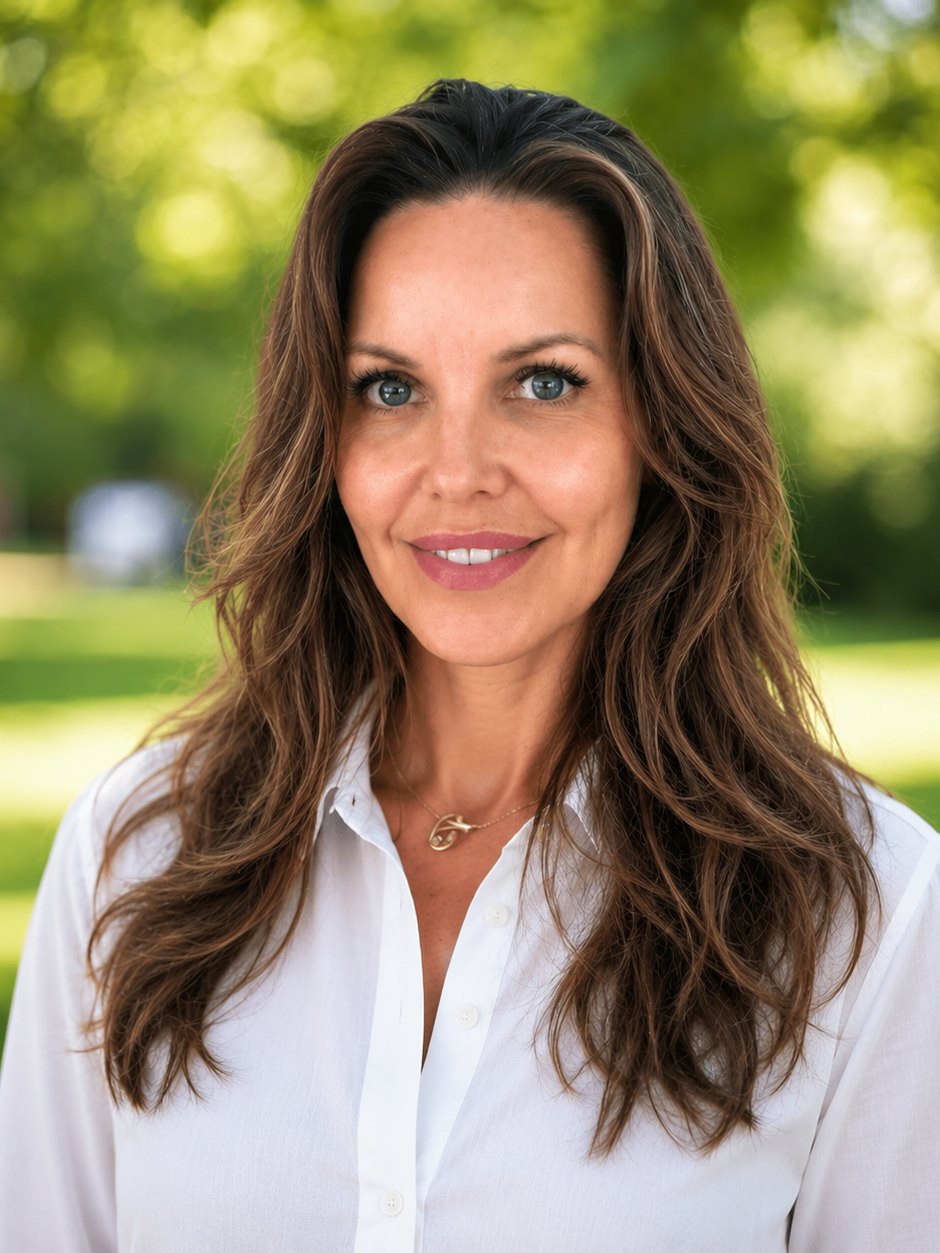
Kelly Goble, MS, CCC-SLP
I have spent 20 years as a speech-language pathologist — in hospitals, in skilled nursing and assisted living, and in people’s homes. Those settings teach different things. The hospital teaches you to move quickly and read a chart properly. The home teaches you what someone actually needs on a Tuesday afternoon.
The goal was never to make someone sound the way they used to. It was to get them back into their own conversations. Kelly Goble, MS, CCC-SLP
Healthcare Straight Up is a solo practice. The person who evaluates you is the person who treats you every week, so nothing is handed off and nothing falls between visits. Most of my referrals come from physicians I have worked alongside for years, and families are always welcome to reach out directly.

Getting started
How it works
No referral needed to make the first call, and no obligation to book anything.
-
Call or text
Tell me what you are noticing. This first conversation costs nothing, and if speech therapy is not the right answer I will say so and point you somewhere better.
-
Evaluation
We meet at your home or by video. I assess speech, language, cognition, and swallowing as needed, then we agree on goals that matter in your daily life — not goals that only matter on paper.
-
Weekly practice
One-hour sessions, usually once or twice a week, with home practice in between that fits your routine. Goals are revisited as things change, because they always do.
Resources
Plain-language articles for families
Stroke recovery, dementia care, caregiver strain, and what therapy actually looks like — written without jargon, and free to read.
Not sure whether therapy is the right step?
That is exactly the right reason to call. We will talk through what you are seeing, and I will tell you honestly whether an evaluation would help. Fees and options are discussed once I understand what you need.